

Salad Paper Bowl Lids: PET, PP and Paper Compared
2026-10-22 16:58
🥗 The Salad Bowl Lid Is a Display Decision
Salad sells on sight. Greens, grains, and toppings arrive in a cold, visible format, so the lid carries part of the merchandising job alongside the barrier job. Buyers choosing salad bowl lids are choosing what the customer sees first on a shelf or in a delivery bag.
Three materials cover most salad containers in foodservice: PET, PP, and paper. Each one solves a different problem, and mixing the choice across a menu without a reason usually produces fogged displays, leaking bags, or a broken sustainability claim.
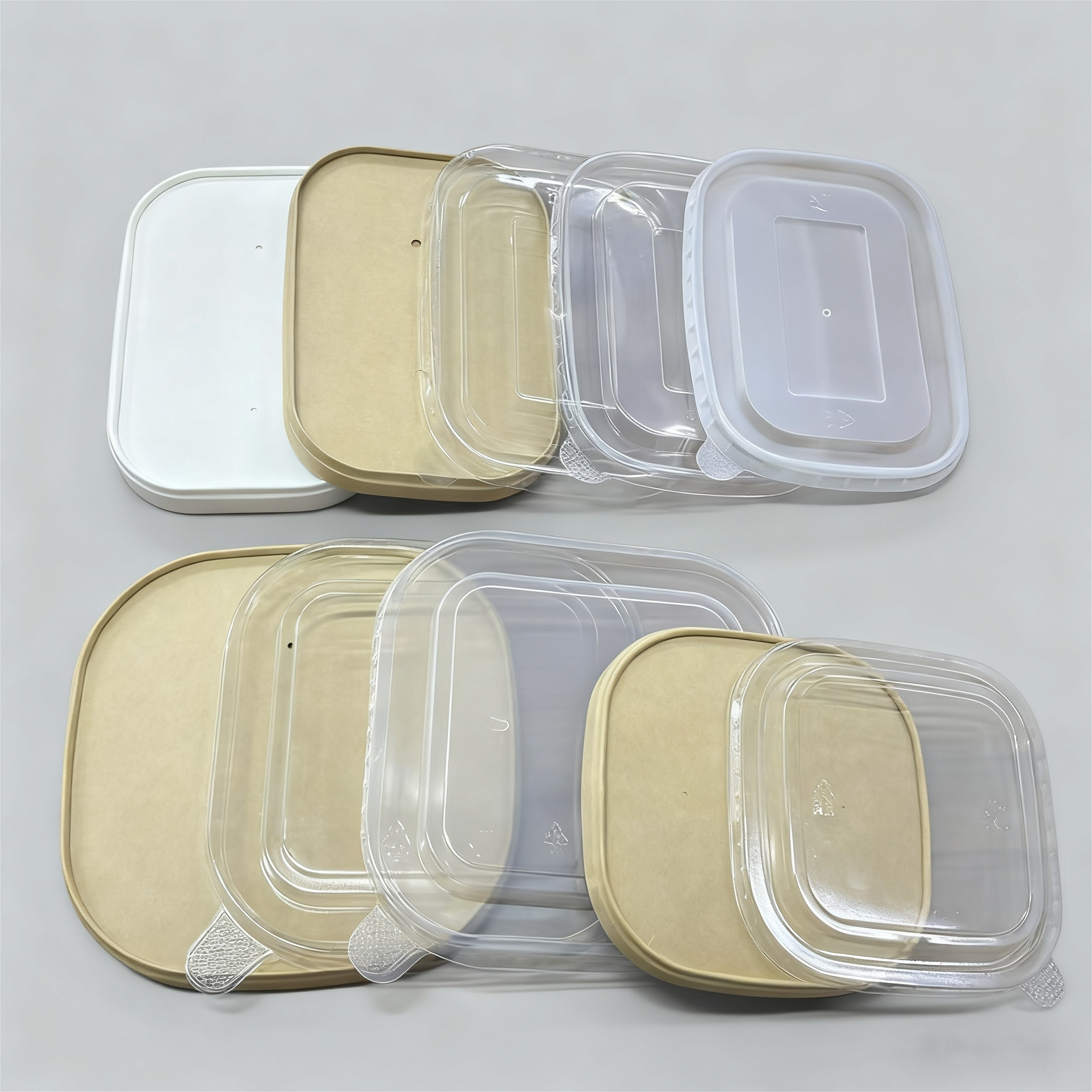
(Square Lid)
🔍 The Three Materials
PET
Crystal-clear finish, best product visibility
Rigid and dimensionally stable in cold service
Heat limit around 60-70 °C
Recycling stream number 1, widely accepted
PP
High impact strength and hinge capability
Tolerates hot grain bowls and warm menus
Translucent to opaque, lower clarity than PET
Recycling stream number 5, accepted less widely
Paper
Natural fiber look with a premium hand feel
Supports compost and paper-recycle messaging
No product visibility
Needs a coating check for wet dressings
The three families also differ in how the closure meets the bowl. PET lids typically snap onto a rolled rim with a crisp click, PP lids flex further and tolerate a wider rim tolerance, and paper lids rely on a firm press fit, where the fit depends heavily on rim shape.
📊 Comparison Table
| Criterion | PET | PP | Paper |
|---|---|---|---|
| Clarity | Highest | Medium | None |
| Rigidity | High | High, more flexible | Medium |
| Cold performance | Excellent | Excellent | Good |
| Heat tolerance | 60-70 °C | Up to about 100 °C | Depends on coating |
| Leak control | High with a gasket | High, forgiving fit | Medium for wet dressing |
| Condensation behaviour | Fogs visibly | Hides minor fog | Absorbs, can stain |
| Recycling | Stream 1 | Stream 5 | Paper stream if uncoated |
| Compostable | No | No | Yes when certified |
| Printable area | Limited, label common | Good | Best |
| Cost index | Medium | Low | Higher |
🥣 Matching Lid to Service Format
| Service Format | Recommended Lid | Reason |
|---|---|---|
| Grab-and-go retail salad | PET lids, domed | Clear view of greens and toppings |
| Delivery salad with dressing | PP lids with gasket | Forgiving fit plus strong leak control |
| Hot grain bowl | PP lids | Heat tolerance above PET limits |
| Compost-programme salad | Paper lids | Matches a fiber bowl without plastic |
| Catering platter | PP or paper dome | Stack strength and volume |
| Meal kit component | PET or PP flat | Low profile for carton packing |
The pairing rule is simple: cold and visible points to PET, warm and tough points to PP, and a compost claim points to paper. Buyers running salad containers across several channels often carry two closure types rather than forcing one material to cover every case.
💧 Condensation and Visibility
Cold salads release moisture, and the lid becomes the coldest surface in the pack. Water beads on the inside of PET lids and can obscure the product within minutes of moving from a chilled case to ambient air.
Three practical fixes exist. Anti-fog additives reduce droplet formation on PET. PP lids hide light fog because the material is not fully transparent. Paper lids absorb surface moisture rather than showing droplets, at the cost of visible staining on long holds.
♻️ End-of-Life and Claims
PET sits in recycling stream 1, which most municipal programmes accept. PP sits in stream 5, accepted by fewer programmes, and the gap matters when a buyer makes a recyclability claim at chain level.
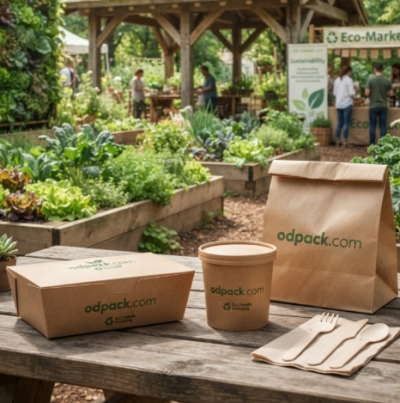
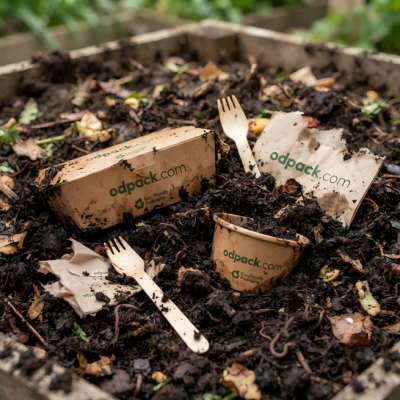
Paper lids close the loop for fiber programmes, provided the coating suits the menu and the certification covers the finished article. A fiber lid paired with a plastic bowl breaks the claim, and the mixed pair usually lands in general waste, so salad containers and lids should share a material family.
✅ RFQ Checklist for Salad Bowl Lids
Six items settle a salad bowl lids specification before any sample leaves the factory.
Fit: bowl top diameter, rim profile, and a fitted sample set for the salad containers in the programme.
Clarity: whether the channel needs full product visibility or accepts a translucent finish.
Leak specification: dressing, oil, and tilt test defined in millilitres and minutes.
Temperature: cold only, or warm grain bowls pushing past PET limits.
End-of-life: the claim attached to the pack, and the certificate covering the full construction.
Print: label or direct print, and the panel area available on each material.
🏭 ODPACK Salad Bowl Lids
ODPACK supplies salad bowl lids in PET, PP, and paper, matched to salad containers produced across 20+ lines in Xiamen. Every programme ships as a tested set with fit and retention checks before volume production.
Closure engineering detail sits in the lid systems comparison, and bowl structure sits in the paper bowl engineering guide. Buyers running low-stack formats can review the low-stack salad bowl range for freight efficiency.
🥗 Choosing a Lid for Your Salad Line?
Send the bowl drawing, dressing type, and channel — ODPACK will match a closure and ship fitted samples.
📧 info@orderpack.cn | 📞 +86 135 999 10171 | 🌐 odpack.com
❓ Frequently Asked Questions
Which lid is best for grab-and-go salads?
PET. Clarity drives the sale in a chilled case, and the material stays rigid in cold service. Choose a domed profile when toppings sit above the rim of the salad containers.
Can PET lids go in the microwave?
No. PET softens around 60-70 °C, so a reheated bowl distorts the closure and can drop the lid. PET lids stay in the cold case, and warm or hot menus move to PP lids before microwave instructions go on the pack.
Are paper lids leak-proof for dressing?
For dry and lightly dressed salads, yes. Oil-heavy dressing needs a coated paper lids grade plus a tighter rim fit, and the combination should pass a tilt test before a menu switch.
Why does my salad lid fog up?
Cold food meets warmer air at the lid surface, and moisture condenses inside. Anti-fog PET, translucent PP, or an absorbent paper closure each reduce the effect, and pre-chilling the bowl helps as well.
Commission Regulation (EU) No 10/2011 — Plastic food contact materials
Regulation (EC) No 1935/2004 — Framework Regulation on Food Contact Materials
US FDA 21 CFR 177.1630 — Polyethylene phthalate polymers (PET) for food contact
US FDA 21 CFR 177.1520 — Olefin polymers (PP and PE) for food contact
EN 13432 — Packaging compostability standard
ODPACK lid fit and retention specification, 2026
Related News
Read More >-
![Paper Cup Coatings: EVA, Acrylic, PLA and PE Compared]()
Paper Cup Coatings: EVA, Acrylic, PLA and PE Compared
Paper cup coating decides heat resistance, film cracking, and compost claims. ODPACK compares EVA, acrylic, PLA, and PE systems, including the production behaviour behind each film.
-
![Bagasse vs Kraft vs PP: A Material Selection Matrix]()
Bagasse vs Kraft vs PP: A Material Selection Matrix
Menu temperature, oil load, and end-of-life rules decide whether bagasse food packaging, kraft food containers, or plastic food containers fit. ODPACK builds a selection matrix by menu type.
-
![Thanksgiving Catering Packaging: A 2026 Order Timeline]()
Thanksgiving Catering Packaging: A 2026 Order Timeline
Catering teams finalize Thanksgiving menus through October, and packaging must clear production before the Q4 freight crunch. ODPACK maps a six-week order timeline with volume math.
-
![How Does Sushi Push Up Tube Packaging Improve Freshness?]()
How Does Sushi Push Up Tube Packaging Improve Freshness?
Freshness is one of the most important qualities consumers expect from prepared sushi. After sushi is assembled, exposure to moisture, grease, handling, and the surrounding environment can affect its appearance and eating experience. A thoughtfully designed sushi push up tube provides a controlled packaging environment that helps protect the product during storage, transportation, and consumption.
-
![Why Choose Wholesale Sushi Push Up Tube Packaging?]()
Why Choose Wholesale Sushi Push Up Tube Packaging?
As takeaway sushi and ready-to-eat food continue to develop, packaging needs to do more than simply hold a product. Restaurants, retailers, caterers, and food distributors are looking for packaging that combines food protection, convenience, presentation, and efficient purchasing. For these businesses, wholesale sushi push up tube packaging offers a practical format designed around the real needs of modern foodservice.
-
![How Does Sushi Paper Tube Packaging Support Food Safety?]()
How Does Sushi Paper Tube Packaging Support Food Safety?
For takeaway and retail applications, the combination of a suitable sushi paper tube, food-contact-appropriate materials, effective handling procedures, and practical design can create a more reliable packaging solution. As consumers continue to value both convenience and hygiene, well-engineered paper sushi container formats such as the sushi roll tube and sushi push pop can provide useful support for modern sushi businesses.
-
![Food Packaging Certifications: FDA, FSC, CE, BRCGS]()
Food Packaging Certifications: FDA, FSC, CE, BRCGS
FDA, FSC, CE, and BRCGS — four certifications every food packaging buyer asks about. ODPACK decodes what each certificate proves, which markets require it, and how to verify supplier documents before placing wholesale food packaging orders.
-
![Compostable vs Recyclable: Choose Right for Foodservice]()
Compostable vs Recyclable: Choose Right for Foodservice
Compostable and recyclable packaging both claim sustainability, but each works only in specific foodservice conditions. ODPACK compares cost, durability, waste infrastructure, and end-of-life outcomes to help buyers choose the right food containers for every application.