

Compostable vs Recyclable: Choose Right for Foodservice
2026-08-12 15:46
⚖️ Two Claims, Two Realities
Every food containers buyer evaluating sustainability claims eventually confronts the compostable-versus-recyclable question. Both options reduce landfill waste, yet each delivers value only under specific conditions: local composting infrastructure, food contamination levels, collection systems, and operator behavior.
Choosing compostable packaging for a market without organic waste collection produces the same landfill outcome as recyclable packaging arriving contaminated at a sorting facility.
ODPACK production data across paper bowls, disposable bowls, and takeout food containers shows the practical difference matters more than the label. A compostable packaging claim requires certification, commercial composting access, and clear labeling. A recyclable packaging claim requires paper-mill acceptance, contamination thresholds, and consumer sorting compliance. Each system fails differently — and buyers need to match the system to the outlet.
🔬 The Science Behind Each Claim
What Compostable Actually Means
Compostable packaging certified under ASTM D6400 or EN 13432 must break down into biomass, carbon dioxide, and water within 90 to 180 days under commercial composting conditions — sustained temperatures of 55°C or higher. Molded fiber paper bowls and PLA-lined disposable bowls meet the standard when industrial composting facilities accept them. Home-compostable certification (TÜV OK Compost Home) uses lower temperature thresholds, though availability remains limited for food containers.
What Recyclable Actually Means
Recyclable packaging claims mean the material can be collected, sorted, and processed into new products through existing recycling infrastructure. Uncoated or PE-coated paper bowls enter paper recycling streams where mills accept food-soiled fiber. The key limitation: grease and food contamination above acceptable thresholds sends food containers to landfill despite the recyclable label. Recycle Check and similar programs let operators verify mill acceptance by region.
✅ Compostable Works When
Commercial composting facility within the waste collection route
High food contamination expected (salad, leftovers, sauce)
Operator trains staff on separate organics streams
Municipal or state programs subsidize organic collection
✅ Recyclable Works When
Paper mill in the region accepts food-soiled fiber
Low food contamination (dry pastries, bread, sandwiches)
Consumers sort correctly at front-of-house bins
Clean, uncoated or PE-coated paper products used
📊 Cost & Performance Reality Check
| Factor | Compostable Packaging | Recyclable Packaging |
|---|---|---|
| Material cost premium vs standard | 15–25% higher | 5–15% higher |
| Hot food holding (paper bowls) | Good with PLA lining | Good with PE lining |
| Grease resistance | Moderate (PLA/water-based) | High (PE lining) |
| Shelf storage | Some PLA grades degrade over time | Stable for years |
| End-of-life requirement | Commercial composter required | Paper mill acceptance required |
| Failure mode | Labeled compostable, landfilled when no facility | Labeled recyclable, landfilled when contaminated |
The 15 to 25 percent material premium for compostable packaging reflects certification costs, specialized resins, and lower production volumes. Recyclable packaging carries a smaller premium because PE-coated paper bowls reuse existing production lines. For chains operating high-volume food containers programs, the per-unit difference across millions of units justifies a formal waste infrastructure audit before committing to either claim.
📍 How to Audit Your Local Waste Infrastructure
Choosing between compostable materials and recyclable packaging starts with a three-step audit. First, contact the local waste hauler serving each location and request the list of accepted materials for the organics stream and the paper stream.
Second, identify whether a commercial composting facility operates within the collection route and whether food containers with food residue are accepted. Third, confirm paper mill acceptance of food-soiled paper bowls and disposable bowls in the region served by the recycling facility.
Operators running locations across multiple states or countries face different answers at every site. A compostable packaging program validated in Portland fails in cities without organics collection. A recyclable materials program validated in Seattle fails in regions where mills reject food-contaminated fiber.
The correct answer for a national chain often mixes both systems by region — compostable food containers where infrastructure exists, recyclable paper bowls where mills accept soiled fiber.

🧭 Decision Framework for Buyers
| Application | Recommended Choice | Reason |
|---|---|---|
| Salad bowls, leftovers, high-food-waste outlets | Compostable | Food contamination makes paper recycling unviable |
| Dry bakery, bread, sandwiches | Recyclable | Low contamination keeps fiber mill-eligible |
| Campus dining with organics collection | Compostable | Closed-loop infrastructure exists on site |
| Food courts in regions without organics | Recyclable | Compostable would landfill anyway without facility |
| Hot soups, chili, high-grease dishes | Recyclable PE-lined | PE lining provides superior grease and heat barrier |
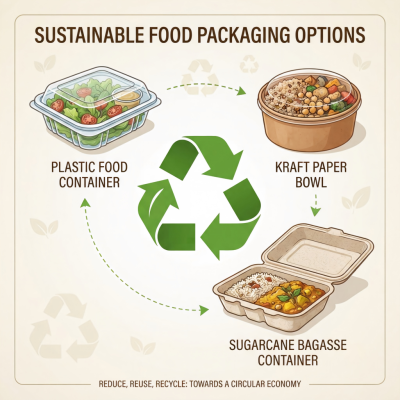
ODPACK supplies both compostable packaging (PLA-lined and bagasse bowls) and recyclable materials (PE-lined disposable bowls and containers) with certification documents for each claim. The ODPACK team helps buyers match containers specifications to local waste infrastructure, avoiding the common trap of paying sustainability premiums for packaging still ending up in landfill.
📋 Unsure Which System Fits Your Market?
Contact ODPACK for compostable and recyclable samples, certification documents, and waste-infrastructure matching guidance.
📧 info@orderpack.cn | 📞 +86 135 999 10171 | 🌐 odpack.com
❓ Frequently Asked Questions
Is compostable materials always better for the environment?
No. Compostable packaging benefits the environment only when commercial composting infrastructure processes the material. Without access to a facility, compostable containers follow the same landfill path as conventional bowls — while costing 15 to 25 percent more than recyclable packaging alternatives.
Can PE-lined bowls be recycled?
Yes, in regions where paper mills accept food-soiled and PE-coated fiber. The PE coating separates during repulping, and mills supporting coated board recycling process bowls and disposable bowls effectively. Verify regional mill acceptance before labeling products as recyclable materials.
How long does compostable take to break down?
ASTM D6400 and EN 13432 certified compostable disintegrates within 90 to 180 days under commercial composting conditions (55°C+ sustained temperature). Home composting takes longer, and many containers require the higher temperatures only industrial facilities provide.
Which option costs less for high-volume foodservice?
Recyclable packaging costs less at volume — 5 to 15 percent above standard versus 15 to 25 percent for compostable. The gap narrows in regions with organics subsidies, but recyclable bowls remain the lower-cost choice for most disposable bowls and containers programs.
ASTM D6400 — Standard Specification for Labeling of Plastics Designed to be Aerobically Composted
EN 13432 — Packaging: Requirements for Recoverable by Composting and Biodegradation
SP News — "Compostable vs Recyclable Packaging: What Actually Works in Real Food Service Conditions?", April 2026
Lebeipackaging — "Recyclable vs Compostable Flexible Packaging: What B2B Brands Need to Know in 2026", March 2026
Ybjpacking — "Sustainable Packaging Claims: Recyclable vs Compostable vs Biobased", February 2026
Related News
Read More >-
![How Does Sushi Push Up Tube Packaging Improve Freshness?]()
How Does Sushi Push Up Tube Packaging Improve Freshness?
Freshness is one of the most important qualities consumers expect from prepared sushi. After sushi is assembled, exposure to moisture, grease, handling, and the surrounding environment can affect its appearance and eating experience. A thoughtfully designed sushi push up tube provides a controlled packaging environment that helps protect the product during storage, transportation, and consumption.
-
![Why Choose Wholesale Sushi Push Up Tube Packaging?]()
Why Choose Wholesale Sushi Push Up Tube Packaging?
As takeaway sushi and ready-to-eat food continue to develop, packaging needs to do more than simply hold a product. Restaurants, retailers, caterers, and food distributors are looking for packaging that combines food protection, convenience, presentation, and efficient purchasing. For these businesses, wholesale sushi push up tube packaging offers a practical format designed around the real needs of modern foodservice.
-
![How Does Sushi Paper Tube Packaging Support Food Safety?]()
How Does Sushi Paper Tube Packaging Support Food Safety?
For takeaway and retail applications, the combination of a suitable sushi paper tube, food-contact-appropriate materials, effective handling procedures, and practical design can create a more reliable packaging solution. As consumers continue to value both convenience and hygiene, well-engineered paper sushi container formats such as the sushi roll tube and sushi push pop can provide useful support for modern sushi businesses.
-
![Food Packaging Certifications: FDA, FSC, CE, BRCGS]()
Food Packaging Certifications: FDA, FSC, CE, BRCGS
FDA, FSC, CE, and BRCGS — four certifications every food packaging buyer asks about. ODPACK decodes what each certificate proves, which markets require it, and how to verify supplier documents before placing wholesale food packaging orders.
-
![EU PPWR Effective Aug 12: What Importers Must Do Now]()
EU PPWR Effective Aug 12: What Importers Must Do Now
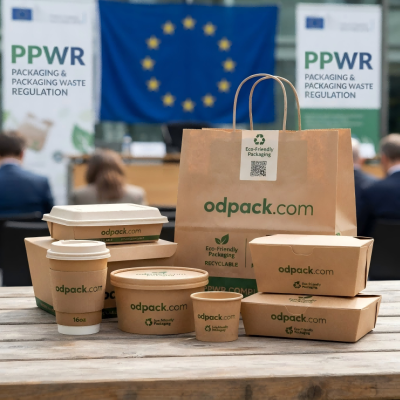
The EU Packaging and Packaging Waste Regulation takes full effect August 12, 2026, with new PFAS limits on food packaging. ODPACK explains what Asian suppliers and importers must verify, document, and change before shipping into European markets.
-
![MOQ Negotiation: 5 Tactics That Work for Chain Buyers]()
MOQ Negotiation: 5 Tactics That Work for Chain Buyers
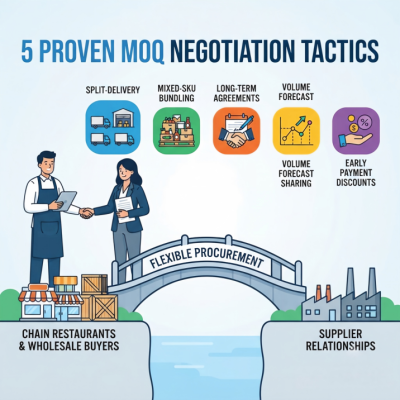
Minimum order quantity constraints block procurement flexibility for chain restaurants and wholesale buyers. ODPACK presents five proven MOQ negotiation tactics — from split-delivery structures to mixed-SKU bundling — that reduce per-unit risk without harming supplier relationships.
-
![Plastic Packaging Regulations: A 2025-2027 Compliance Timeline]()
Plastic Packaging Regulations: A 2025-2027 Compliance Timeline
From the EU to California to Canada, single-use plastic packaging regulations are accelerating. ODPACK maps every major compliance deadline between 2025 and 2027, showing which food containers, bowls, and packaging categories face mandatory material changes and when.
-
![Why Chain Restaurants Are Switching to Fiber Packaging in 2026]()
Why Chain Restaurants Are Switching to Fiber Packaging in 2026
In 2026, major restaurant chains accelerate the shift from plastic to fiber packaging. ODPACK analyzes the policy drivers, cost dynamics, and three brand case studies behind the industry-wide transition reshaping food containers procurement.