

EU PPWR Effective Aug 12: What Importers Must Do Now
2026-08-10 15:30
⏳ The Deadline Is Real: August 12, 2026
On August 12, 2026, the EU Packaging and Packaging Waste Regulation (PPWR, Regulation (EU) 2025/40) moves from its entry-into-force phase into the first binding application phase. Two days from the date of publication, every food packaging product placed on the European market must comply with new PFAS concentration limits.
For importers, wholesale distributors, and chain buyers sourcing paper cups, food containers, and wholesale containers from Asia, August 12 marks the point where documentation becomes a shipment-blocking requirement rather than a nice-to-have.
European Commission guidance published in June 2026 clarifies food packaging placed on the market after August 12 must comply with the PFAS concentration limits in Article 5(5) of the PPWR. The same date triggers labelling requirements for reusable containers in the hospitality sector. Importers shipping wholesale containers or paper cups into the EU without updated compliance documentation risk customs holds, rejected shipments, and destroyed inventory at port.
📊 The New PFAS Limits at a Glance
| Requirement | Limit | Applies From |
|---|---|---|
| Any single PFAS (targeted analysis) | 25 ppb | August 12, 2026 |
| Sum of PFAS (targeted analysis) | 250 ppb | August 12, 2026 |
| Recyclability design criteria | All packaging recyclable | January 1, 2030 |
| Minimum recycled content (contact-sensitive plastic) | 30% | January 1, 2030 |
| Ban on landfill/incineration of non-compliant packaging | Full ban | January 1, 2030 |
Note: the 25 ppb single-PFAS and 250 ppb total-PFAS thresholds apply to packaging specifically under Article 5(5). Polymeric PFAS are excluded from the quantification for the single-compound limit. Buyers should request laboratory test reports using targeted PFAS analysis methods from suppliers of cups, containers, and bulk containers entering European distribution channels.
✅ Five Actions to Complete Before the Next Shipment
Audit Every SKU Against the PFAS Thresholds
Review the complete packaging product range: molded fiber food containers, coated cups, molded pulp plates, and any bulk containers with grease-resistant coatings. Products treated with fluorinated coating agents historically used for oil and grease resistance are the highest-risk categories. Request material safety data and coating composition declarations from every supplier before placing new orders for sustainable packaging alternatives.
Request Targeted PFAS Laboratory Reports
Third-party laboratory reports using targeted PFAS analysis methods provide the only reliable proof of compliance with the 25 ppb and 250 ppb thresholds. ISO 17025 accredited laboratories in China, Europe, and North America offer the testing. Shipment-ready food packaging documentation should include the test report, the coating declaration, and the raw material certificate for every batch of cups and food containers.
Verify Supplier Declarations of Conformity
The PPWR places responsibility on the economic operator placing packaging on the EU market. Importers must hold valid Declarations of Conformity covering the new PFAS limits, recyclability parameters, and material composition for bulk containers and containers. Request updated documentation from all suppliers — older certificates issued before June 2026 may not reference Article 5(5) compliance.
Re-Specify High-Risk Products to PFAS-Free Materials
For paper cups and containers relying on fluorinated grease barriers, the simplest compliance path switches to PFAS-free alternatives: PLA-lined cups, water-based coated containers, and bagasse or molded pulp wholesale containers with compostable barrier coatings. The sustainable packaging options meet the August 12 limits without redesigning the full product range.
Build the Compliance File Into Purchase Agreements
Make PFAS test reports, Declarations of Conformity, and material certificates contractual deliverables in every purchase order for packaging destined for the EU. Buyers protecting downstream customers include penalty clauses for missing documentation. Importers of cups, containers, and bulk containers who formalize the requirements in writing eliminate the risk of discovering non-compliance at port.
🚨 What Happens If Shipments Do Not Comply
Non-compliant packaging arriving after August 12 faces three outcomes. First, customs authorities may hold the consignment pending documentation review, delaying delivery by weeks. Second, EU member state market surveillance authorities can order withdrawal of non-compliant food containers already distributed.
Third, importers bear the full cost of destroyed or returned bulk containers — plus potential administrative fines varying by member state. The financial exposure across a single 40HC container of cups and containers can exceed the shipment value itself.
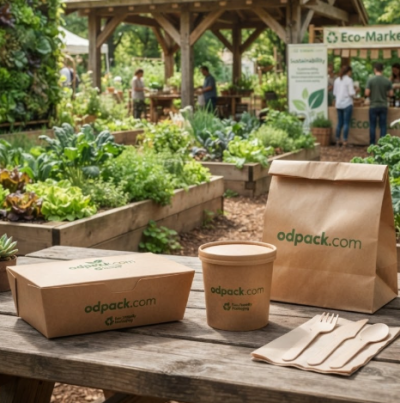
ODPACK manufactures packaging including cups, molded fiber containers, bagasse products, and bulk containers with PFAS-free barrier options and full EU compliance documentation.
The product range covers food containers and wholesale containers for every distribution channel. The Xiamen facility maintains targeted PFAS test reports for all sustainable packaging lines, ready for shipment files. Contact ODPACK for updated compliance documentation and sustainable packaging samples meeting the August 12 PPWR thresholds.
📋 Ship to Europe? Verify Compliance Before You Book
Contact ODPACK for PFAS test reports, EU Declarations of Conformity, and PPWR-compliant packaging samples.
📧 info@orderpack.cn | 📞 +86 135 999 10171 | 🌐 odpack.com
❓ Frequently Asked Questions
Does the PPWR ban all plastic food packaging?
No. The PPWR sets recyclability requirements, recycled content minimums, and PFAS concentration limits rather than banning plastic packaging outright. Plastic containers remain permitted when meeting the 2030 recyclability standard and the 2030 recycled content requirements. Paper cups and wholesale containers with plastic coatings face the same recyclability rules.
Which packaging products are most at risk from the PFAS limits?
Molded fiber containers, paper cups, and coated packaging using fluorinated grease and oil barriers carry the highest risk. Bagasse plates, molded pulp bowls, and sustainable packaging with water-based coatings typically test below the 25 ppb threshold. Suppliers should provide targeted PFAS laboratory reports to confirm.
Do the PFAS limits apply to stock already in transit?
The August 12 application date governs packaging placed on the market from the application date. Shipments already cleared through EU customs before August 12 follow the prior rules. Importers should confirm the vessel arrival and customs clearance date against the application deadline when planning bulk containers and cups shipments in August.
What documents should importers request from suppliers now?
Request three documents: a targeted PFAS laboratory test report (ISO 17025 accredited), a Declaration of Conformity referencing Article 5(5) of the PPWR, and a raw material/coating composition certificate. Buyers of containers and packaging should also request the recyclability assessment for each SKU to prepare for 2030 requirements.
Regulation (EU) 2025/40 — Packaging and Packaging Waste Regulation (PPWR), Official Journal of the European Union, January 2025
European Commission — Final PPWR Guidance Including PFAS Compliance Interpretation for Food-Contact Packaging, published June 2026
Packaging Europe — "Diving Deeper Into the EU's Latest Guidance on the PPWR," June 2026
Innoform Testservice — "Per- and Polyfluorinated Alkyl Compounds (PFAS)" compliance summary, July 2026
Related News
Read More >-
![How Does Sushi Push Up Tube Packaging Improve Freshness?]()
How Does Sushi Push Up Tube Packaging Improve Freshness?
Freshness is one of the most important qualities consumers expect from prepared sushi. After sushi is assembled, exposure to moisture, grease, handling, and the surrounding environment can affect its appearance and eating experience. A thoughtfully designed sushi push up tube provides a controlled packaging environment that helps protect the product during storage, transportation, and consumption.
-
![Why Choose Wholesale Sushi Push Up Tube Packaging?]()
Why Choose Wholesale Sushi Push Up Tube Packaging?
As takeaway sushi and ready-to-eat food continue to develop, packaging needs to do more than simply hold a product. Restaurants, retailers, caterers, and food distributors are looking for packaging that combines food protection, convenience, presentation, and efficient purchasing. For these businesses, wholesale sushi push up tube packaging offers a practical format designed around the real needs of modern foodservice.
-
![How Does Sushi Paper Tube Packaging Support Food Safety?]()
How Does Sushi Paper Tube Packaging Support Food Safety?
For takeaway and retail applications, the combination of a suitable sushi paper tube, food-contact-appropriate materials, effective handling procedures, and practical design can create a more reliable packaging solution. As consumers continue to value both convenience and hygiene, well-engineered paper sushi container formats such as the sushi roll tube and sushi push pop can provide useful support for modern sushi businesses.
-
![Food Packaging Certifications: FDA, FSC, CE, BRCGS]()
Food Packaging Certifications: FDA, FSC, CE, BRCGS
FDA, FSC, CE, and BRCGS — four certifications every food packaging buyer asks about. ODPACK decodes what each certificate proves, which markets require it, and how to verify supplier documents before placing wholesale food packaging orders.
-
![Compostable vs Recyclable: Choose Right for Foodservice]()
Compostable vs Recyclable: Choose Right for Foodservice
Compostable and recyclable packaging both claim sustainability, but each works only in specific foodservice conditions. ODPACK compares cost, durability, waste infrastructure, and end-of-life outcomes to help buyers choose the right food containers for every application.
-
![MOQ Negotiation: 5 Tactics That Work for Chain Buyers]()
MOQ Negotiation: 5 Tactics That Work for Chain Buyers
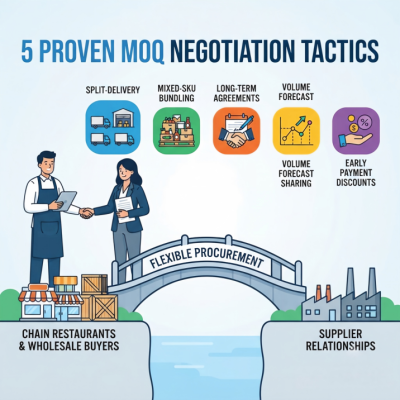
Minimum order quantity constraints block procurement flexibility for chain restaurants and wholesale buyers. ODPACK presents five proven MOQ negotiation tactics — from split-delivery structures to mixed-SKU bundling — that reduce per-unit risk without harming supplier relationships.
-
![Plastic Packaging Regulations: A 2025-2027 Compliance Timeline]()
Plastic Packaging Regulations: A 2025-2027 Compliance Timeline
From the EU to California to Canada, single-use plastic packaging regulations are accelerating. ODPACK maps every major compliance deadline between 2025 and 2027, showing which food containers, bowls, and packaging categories face mandatory material changes and when.
-
![Why Chain Restaurants Are Switching to Fiber Packaging in 2026]()
Why Chain Restaurants Are Switching to Fiber Packaging in 2026
In 2026, major restaurant chains accelerate the shift from plastic to fiber packaging. ODPACK analyzes the policy drivers, cost dynamics, and three brand case studies behind the industry-wide transition reshaping food containers procurement.