

Bagasse vs Kraft vs PP: A Material Selection Matrix
2026-10-15 10:08
🧭 Start With the Menu, Not the Material
Most buyers choose a material first and hunt for a menu afterwards. The wrong sequence produces leaking bowls, soggy boxes, and complaints arriving in the first week of a launch. The reliable path runs the other way around.
Define the menu conditions first, then select food packaging materials against the menu conditions. Three material families cover almost every foodservice program: bagasse food packaging, kraft food containers, and plastic food containers made from polypropylene.
🔬 Four Variables Behind the Material Choice
Menu conditions reduce to four measurable variables. Buyers who answer all four arrive at one material family, and often at a single construction.
1. Temperature
Hot fill above 85 °C narrows the field fast. Fiber needs a barrier layer, and PP handles heat without one.
2. Oil and Fat Load
Fried and sauce-heavy menus demand grease holdout rated on the KIT scale, usually 7 and above.
3. Moisture and Hold Time
Soups and dressings test the seal. Routes beyond 30 minutes test the insulation of food packaging materials.
4. End-of-Life Requirement
Compost, recycle, or general waste. The coating decides the outcome rather than the fiber base.
📊 The Selection Matrix by Menu Type
| Menu Type | Recommended | Alternative | Reason |
|---|---|---|---|
| Hot soup at 90 °C | Bagasse double-wall bowl | PP bowl | Fiber handles heat; PP wins past 45 minutes |
| Fried chicken, heavy oil | Kraft box, KIT 9+ barrier | PP lined tray | Grease barrier plus venting |
| Burgers and fries | Kraft clamshell | Bagasse clamshell | Rigid walls, strong print, venting |
| Cold salad | Bagasse bowl | Kraft bowl | Moisture tolerance without coating loss |
| Iced dessert | PP cup | PE-lined bagasse cup | Condensation control |
| Bakery and pastry | Kraft | Bagasse | KIT 3-4 covers dry goods |
| Delivery, 45 minutes plus | PP or insulated fiber | Bagasse double-wall | Heat retention over distance |
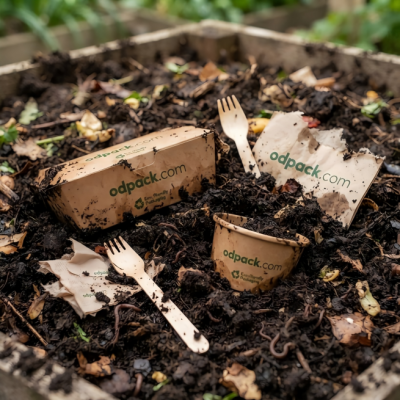
| Compost-required events | Uncoated bagasse | Uncoated kraft | Certification pathway for compostable food containers |
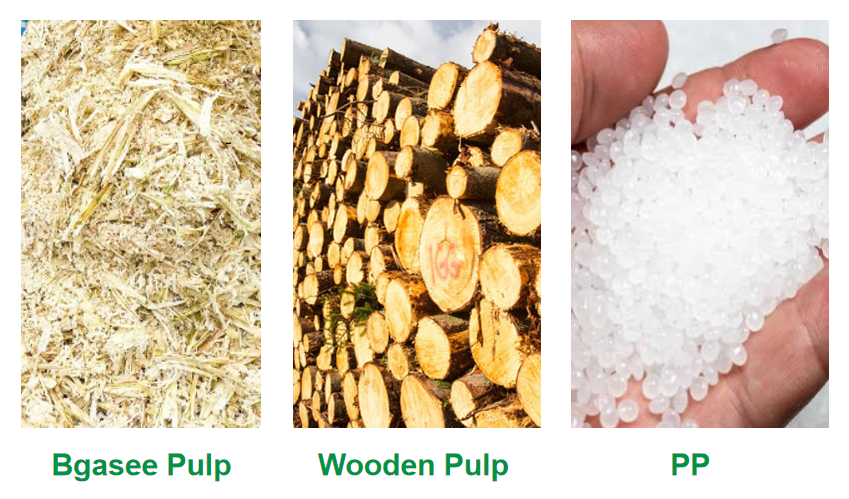
The matrix points to a practical conclusion: fiber formats cover most hot, cold, and dry menus, while plastic food containers keep the long-hold and iced categories. Programs rarely need one material everywhere, so a mixed menu often ships with bagasse food packaging for hot service beside kraft food containers for fried and bakery lines.
⚖️ Head-to-Head Scorecard
| Criterion | Bagasse | Kraft | PP |
|---|---|---|---|
| Heat tolerance | High | Medium | High |
| Oil resistance | Medium | High with barrier | High |
| Moisture and leak control | Medium | Medium | High |
| End-of-life options | Certified compost | Recycle or compost if uncoated | Recycle |
| Unit cost index | Medium | Low | Low |
| Print quality | Good | Excellent | Good |
| Freight volume | Medium | Good, nests well | Excellent |
| Recycled content available | Limited | High, FSC Recycled | Available |
Note where kraft and bagasse separate. Kraft leads on print and recycled content, which matters for brand-led programs. Bagasse leads on heat tolerance and carries the clearest compost story when the surface stays uncoated. For compost-mandated events, uncoated bagasse food packaging and uncoated kraft food containers both reach compostable food containers status, while a coated version does not.
🚦 The Decision Flow in Four Steps
Is the fill temperature above 85 °C? If yes, specify fiber with a barrier, or move the hot line to PP. Temperature narrows the field of food packaging materials faster than any other variable.
Does the menu carry heavy oil or sauce? Specify a KIT 9+ barrier on kraft food containers, or use a lined PP tray.
Does the route exceed 30 minutes? Insulated fiber or PP protects temperature, while single-wall options fall short.
Is compost or recycling mandated? Uncoated fiber reaches compostable food containers status; coated versions usually do not.
⚠️ Three Selection Mistakes
Mistake one: choosing on sustainability alone. A bagasse bowl with a PE lining looks compostable and behaves like plastic. Read the coating before accepting a sustainability claim.
Mistake two: ignoring the coating. The base fiber rarely decides performance alone. Barrier choice drives grease holdout, heat tolerance, and end-of-life for every plastic food containers alternative on the table.
Mistake three: mixing materials across one menu. A program using fiber bowls, PP lids, and coated boxes forces guests to sort three streams. Keep the combination deliberate, and standardise where the menu allows.
🏭 ODPACK Runs All Three Materials
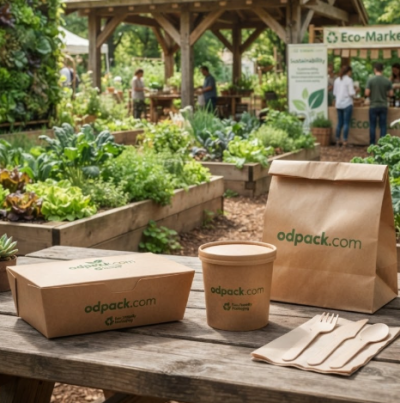
ODPACK produces bagasse food packaging, kraft food containers, and plastic food containers across 20+ production lines in Xiamen, and holds EN 13432 documentation for compostable food containers in the uncoated range. Buyers can source a mixed program from one supplier instead of coordinating three vendors and three documentation sets.
Technical depth on each family is available in the linked guides: the zero-coating bagasse analysis, the kraft specification guide, and the compostable versus recyclable comparison.
🧭 Not Sure Which Material Fits the Menu?
Send the menu list, fill temperatures, and delivery window — ODPACK will return a material recommendation with samples of food packaging materials for each line.
📧 info@orderpack.cn | 📞 +86 135 999 10171 | 🌐 odpack.com
❓ Frequently Asked Questions
Which material is best for hot soup?
A double-wall bowl built from bagasse food packaging handles soup at 90 °C, and a PP bowl wins once the delivery route passes 45 minutes. Test both constructions with the fill-and-hold method before committing volume.
Is bagasse always compostable?
No. Uncoated bagasse reaches certification under EN 13432, while a PE-lined version does not. Ask for the certificate number rather than accepting a general compost claim on compostable food containers.
Is kraft better than plastic for grease?
Kraft with a KIT 9+ barrier matches plastic food containers on grease holdout, and kraft adds printable surface area. Uncoated kraft sits near KIT 4 and fails quickly under fried menus. Choose a barrier grade for kraft food containers whenever the menu carries sauces.
How do I choose between the three for a chain menu?
Run the four-step decision flow on each menu item, then group results by material family. Most chains settle on fiber for hot and cold service, plus PP for iced drinks and long-hold items. Review the four variables against every food packaging materials option before locking the matrix.
Regulation (EU) 2025/40 — Packaging and Packaging Waste Regulation (PPWR), application from August 12, 2026
Regulation (EC) No 1935/2004 — Framework Regulation on Food Contact Materials
Commission Regulation (EU) No 10/2011 — Plastic food contact materials
EN 13432 — Packaging compostability standard
TAPPI T559 — Grease resistance test (KIT method)
US FDA 21 CFR Parts 176 and 177 — Paper and polymer food-contact components
Related News
Read More >-
![Thanksgiving Catering Packaging: A 2026 Order Timeline]()
Thanksgiving Catering Packaging: A 2026 Order Timeline
Catering teams finalize Thanksgiving menus through October, and packaging must clear production before the Q4 freight crunch. ODPACK maps a six-week order timeline with volume math.
-
![How Does Sushi Push Up Tube Packaging Improve Freshness?]()
How Does Sushi Push Up Tube Packaging Improve Freshness?
Freshness is one of the most important qualities consumers expect from prepared sushi. After sushi is assembled, exposure to moisture, grease, handling, and the surrounding environment can affect its appearance and eating experience. A thoughtfully designed sushi push up tube provides a controlled packaging environment that helps protect the product during storage, transportation, and consumption.
-
![Why Choose Wholesale Sushi Push Up Tube Packaging?]()
Why Choose Wholesale Sushi Push Up Tube Packaging?
As takeaway sushi and ready-to-eat food continue to develop, packaging needs to do more than simply hold a product. Restaurants, retailers, caterers, and food distributors are looking for packaging that combines food protection, convenience, presentation, and efficient purchasing. For these businesses, wholesale sushi push up tube packaging offers a practical format designed around the real needs of modern foodservice.
-
![How Does Sushi Paper Tube Packaging Support Food Safety?]()
How Does Sushi Paper Tube Packaging Support Food Safety?
For takeaway and retail applications, the combination of a suitable sushi paper tube, food-contact-appropriate materials, effective handling procedures, and practical design can create a more reliable packaging solution. As consumers continue to value both convenience and hygiene, well-engineered paper sushi container formats such as the sushi roll tube and sushi push pop can provide useful support for modern sushi businesses.
-
![Food Packaging Certifications: FDA, FSC, CE, BRCGS]()
Food Packaging Certifications: FDA, FSC, CE, BRCGS
FDA, FSC, CE, and BRCGS — four certifications every food packaging buyer asks about. ODPACK decodes what each certificate proves, which markets require it, and how to verify supplier documents before placing wholesale food packaging orders.
-
![Compostable vs Recyclable: Choose Right for Foodservice]()
Compostable vs Recyclable: Choose Right for Foodservice
Compostable and recyclable packaging both claim sustainability, but each works only in specific foodservice conditions. ODPACK compares cost, durability, waste infrastructure, and end-of-life outcomes to help buyers choose the right food containers for every application.
-
![EU PPWR Effective Aug 12: What Importers Must Do Now]()
EU PPWR Effective Aug 12: What Importers Must Do Now
The EU Packaging and Packaging Waste Regulation takes full effect August 12, 2026, with new PFAS limits on food packaging. ODPACK explains what Asian suppliers and importers must verify, document, and change before shipping into European markets.
-
![MOQ Negotiation: 5 Tactics That Work for Chain Buyers]()
MOQ Negotiation: 5 Tactics That Work for Chain Buyers
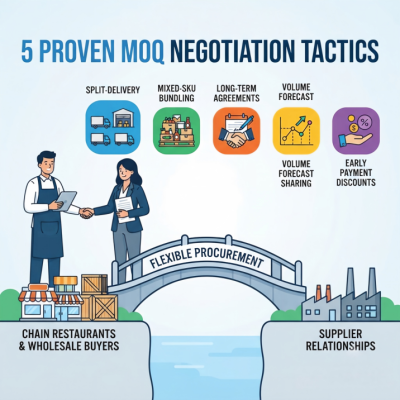
Minimum order quantity constraints block procurement flexibility for chain restaurants and wholesale buyers. ODPACK presents five proven MOQ negotiation tactics — from split-delivery structures to mixed-SKU bundling — that reduce per-unit risk without harming supplier relationships.