

How Do You Create Eye-Catching Paper Food Boxes?
2026-11-06 13:00
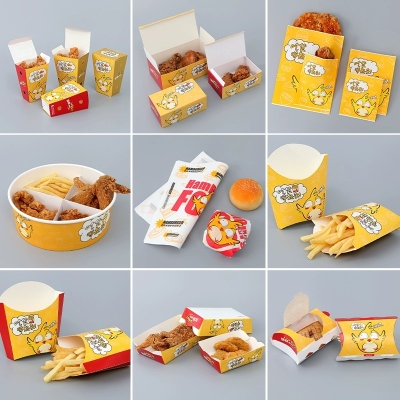
Food packaging is often the first physical impression a customer gets from a restaurant. A well-designed box can make a meal look more appealing, communicate a brand's personality, and encourage customers to remember their experience. Creating eye-catching paper food boxes requires more than attractive graphics: color, structure, material, and usability must work together.
How Can Color and Branding Improve Box Design?
Color helps customers recognize a brand before they open the package. Restaurants can choose a consistent palette that reflects their menu and identity, such as warm tones for comfort food or simple natural colors for a minimalist look. On kraft food boxes, contrasting ink can make a logo or short message stand out against the brown surface.
Keep the layout focused. A clear logo, readable typography, and one memorable graphic often work better than filling every panel with information. Before printing paper food packaging boxes, check that text remains legible at the final size and that important details will not disappear along folding lines.
Which Box Shapes Attract More Attention?
Packaging shape influences both shelf appeal and convenience. Distinctive proportions, neatly folded edges, and well-positioned openings can make a package look more professional. However, a creative design should still be easy to assemble, stack, carry, and open.
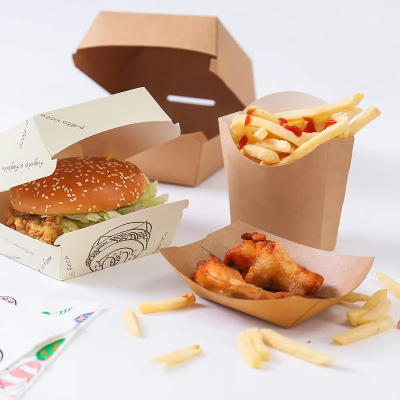
For example, paper food boxes for burgers should hold the meal securely without squeezing the bun or toppings. A box with a stable base and a well-fitting lid can protect the food while presenting it neatly. Test different structures with actual menu items before finalizing the design.
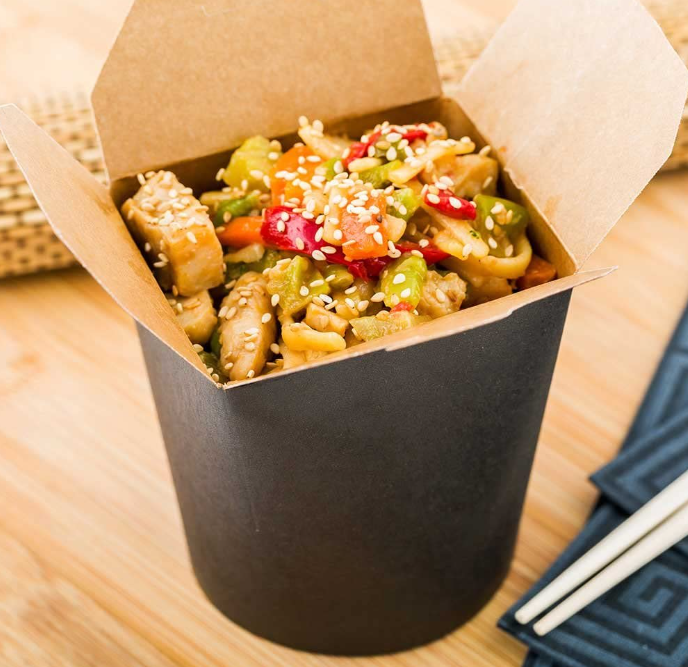
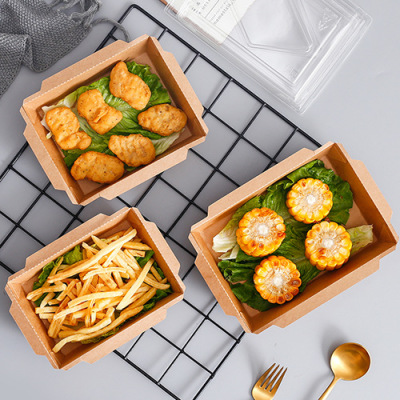
kraft food boxes
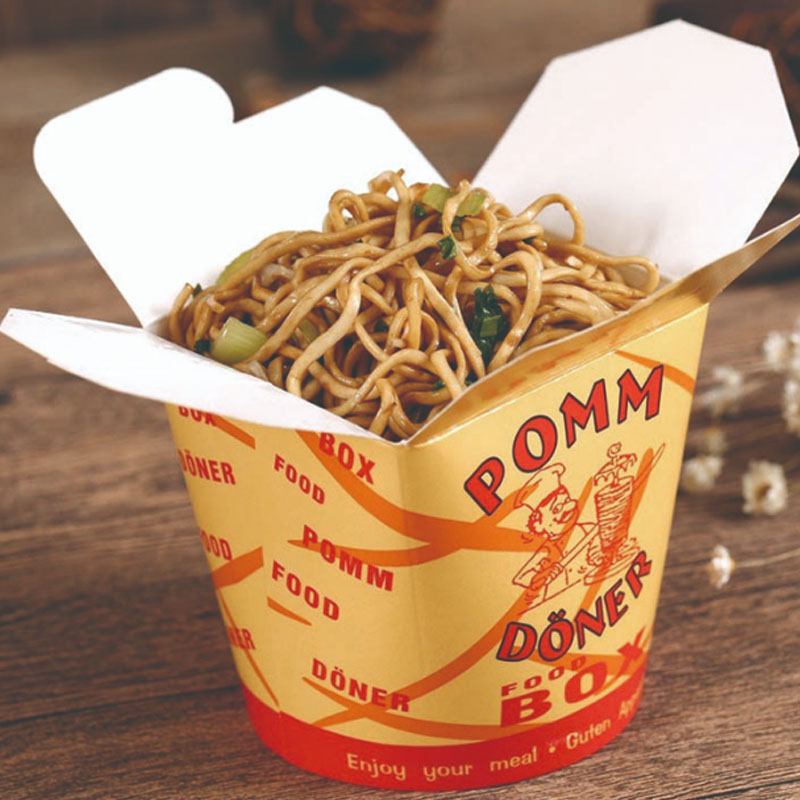
paper food packaging boxes

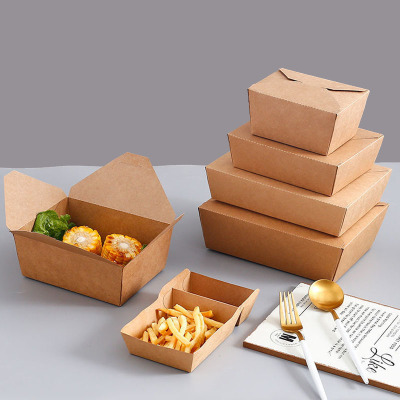
paper food boxes
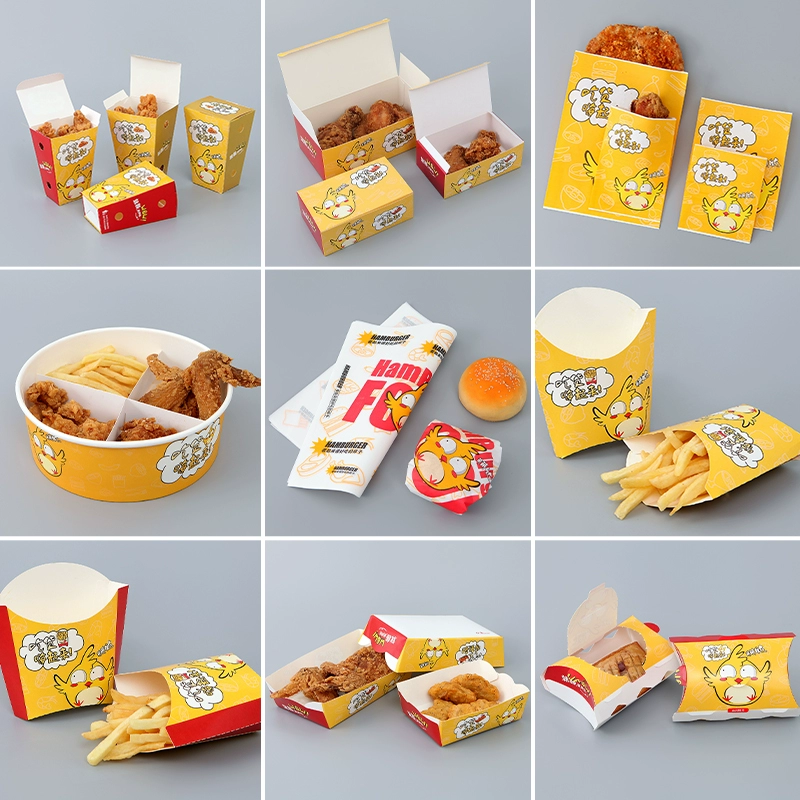
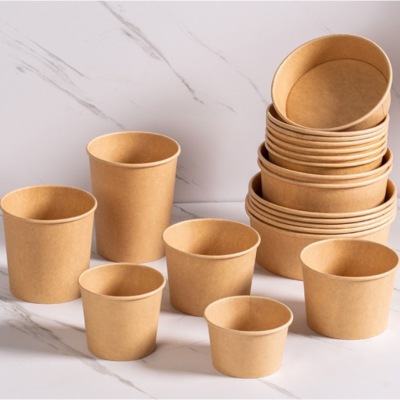
paper takeaway box
How Should Materials Match the Visual Style?
The surface of a package affects how colors and graphics appear. Kraft food boxes provide a natural, understated look that can suit casual restaurants, cafés, and food brands emphasizing simple design. Smooth paperboard may offer a different printing surface for detailed illustrations or brighter color combinations.
When selecting paper food packaging boxes, consider print quality alongside grease resistance, strength, and food-contact requirements. A visually appealing finish is useful only when the package performs well during normal use. Ask for printed samples to evaluate color accuracy, surface texture, folding, and overall appearance.
Can Custom Printing Make Takeaway Packaging Memorable?
Custom printing gives restaurants a way to extend their branding beyond the storefront. Short messages, illustrated ingredients, social media details, or seasonal artwork can turn paper take out boxes into recognizable brand touchpoints. The information should remain relevant and easy to read rather than overwhelming the design.
Consistency is also important. Using related colors, fonts, and graphic elements across different box sizes helps customers connect each package with the same business. A paper takeaway box can follow the same visual system while adapting its layout to different meals and dimensions.
How Can Design Balance Appearance and Sustainability?
An attractive package should not create unnecessary waste. Right-sizing reduces excess material, while simple layouts may lower printing complexity. Businesses can also explore responsibly sourced paper and recyclable options where local collection systems accept the finished packaging.
Do not assume that every paper package is recyclable simply because it is paper-based. Coatings, laminations, and food contamination may affect disposal. When designing paper food boxes, verify material claims and provide clear disposal guidance when appropriate.
What Should You Check Before Production?
Review a physical sample before approving a large order. Check the printed colors, logo placement, structural strength, lid closure, and ease of assembly. Test the box with the intended food to confirm that grease, moisture, and heat do not quickly affect its appearance or performance.
The best design combines strong visual identity with practical function. By choosing suitable materials, using clear graphics, and testing real-world performance, businesses can create paper food packaging boxes that attract attention while supporting a consistent and professional customer experience.
Related News
Read More >-
![How Can Paper Food Boxes Support Sustainability?]()
How Can Paper Food Boxes Support Sustainability?
By choosing appropriately sized paper food packaging boxes, reviewing the construction of kraft food boxes, and using paper take out boxes only where suitable, food-service operators can support more efficient resource use. Sustainable packaging is not a single-material solution; it is an ongoing process of reducing excess, protecting food, and improving waste management through informed decisions.
-
![How Can Paper Boxes Prevent Food Leakage?]()
How Can Paper Boxes Prevent Food Leakage?
Food leakage is a common challenge for restaurants, takeaway counters, and delivery services. Sauces, cooking oil, steam, and moisture can weaken packaging or escape through poorly sealed corners. Well-designed paper boxes can help reduce these problems when their materials, structure, and intended use match the food being packed.
-
![How Do You Design a Custom Paper Fast Food Box?]()
How Do You Design a Custom Paper Fast Food Box?
Designing a custom paper fast food box involves more than choosing a shape and printing a logo. Restaurants need packaging that fits the menu, protects food, supports efficient packing, and presents the brand clearly. A successful design balances appearance, durability, production cost, and disposal requirements.
-
![How Is the Takeaway Industry Changing Food Packaging?]()
How Is the Takeaway Industry Changing Food Packaging?
The takeaway industry is changing as customers expect faster service, reliable delivery, and packaging that suits modern lifestyles. Restaurants must protect food quality while managing costs, reducing material waste, and meeting customer expectations. These changes are influencing how businesses select a fast food burger box, paper carriers, and other food packaging for everyday orders.
-
![How Is Sustainability Changing Fast Food Packaging?]()
How Is Sustainability Changing Fast Food Packaging?
Sustainability is becoming an important consideration for restaurants, takeaway businesses, and food retailers. Customers increasingly want convenient meals with less unnecessary packaging waste, encouraging businesses to rethink materials, design, and disposal. From a fast food burger box to paper carriers, sustainable packaging choices can help food businesses balance product protection, customer experience, and environmental responsibility.
-
![Can Compostable Utensils Help Reduce Plastic Waste?]()
Can Compostable Utensils Help Reduce Plastic Waste?
Plastic waste remains a major challenge for restaurants, takeaway services, hotels, and food retailers. Disposable forks, spoons, and knives are convenient, but conventional plastic products can remain in the environment for many years when improperly discarded. Compostable disposable utensils offer an alternative that can help businesses reduce their reliance on conventional plastics while meeting changing customer expectations.
-
![How Can Wooden Cutlery Brands Stand Out in 2026?]()
How Can Wooden Cutlery Brands Stand Out in 2026?
In 2026, compostable disposable utensils can compete through more than environmental positioning alone. By offering natural birchwood products, supporting responsible sourcing, providing appropriate compliance evidence, and serving foodservice and retail customers with flexible packaging solutions, brands can create meaningful value in an evolving market.
-
![Salad Paper Bowl Lids: PET, PP and Paper Compared]()
Salad Paper Bowl Lids: PET, PP and Paper Compared