

How Do You Design a Custom Paper Fast Food Box?
2026-10-30 13:00
Designing a custom paper fast food box involves more than choosing a shape and printing a logo. Restaurants need packaging that fits the menu, protects food, supports efficient packing, and presents the brand clearly. A successful design balances appearance, durability, production cost, and disposal requirements.
Match the Box Design to the Food
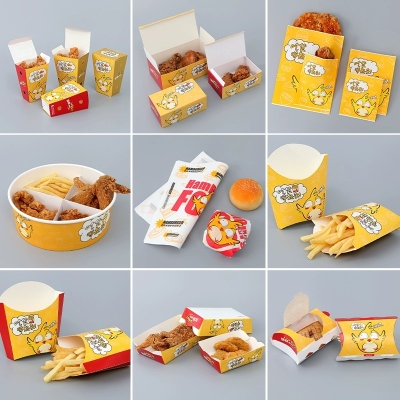
Start by identifying what the package will hold. Burgers, fries, sandwiches, and fried snacks have different sizes, textures, and moisture levels. A fast food burger box should provide enough space to prevent the bun and toppings from being crushed, while keeping the meal secure during transport.
Measure the food and allow practical clearance for easy packing. An oversized fast food packaging box may waste material and allow food to move around, while a box that is too small can deform or be difficult to close. Testing several dimensions with real menu items helps determine the most suitable structure.
Choose Suitable Paper Materials
Paper grade and thickness influence stiffness, folding performance, and resistance to everyday handling. A paper fast food box should retain its shape when filled and remain easy for staff to assemble. The correct specification depends on the food's weight, temperature, oil content, and expected delivery time.
For greasy or moist foods, ask about suitable food-contact materials and barrier treatments. A paper food packaging box must be designed for its intended use rather than relying on appearance alone. Buyers should request relevant food-contact compliance documents and test samples under realistic conditions before approving a large order.
Plan a Functional Box Structure
A good structure makes packing faster and improves the customer's experience. Secure tabs, stable bases, and easy-to-open lids can help prevent accidental opening during delivery. If food releases steam, suitable ventilation may help control condensation and preserve texture.
A paper takeaway box should also fit the restaurant's packing workflow. Boxes that stack neatly can save storage space, while consistent dimensions make it easier to organize different menu items. Consider whether the package needs separate compartments or extra space for sauces and side dishes.
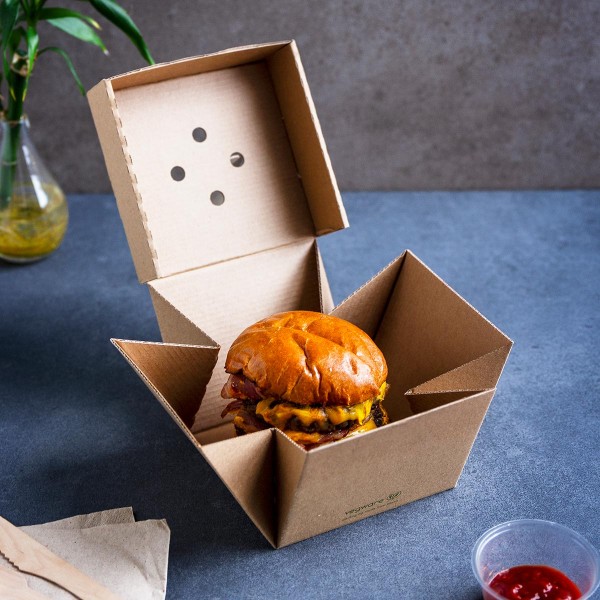
fast food burger box
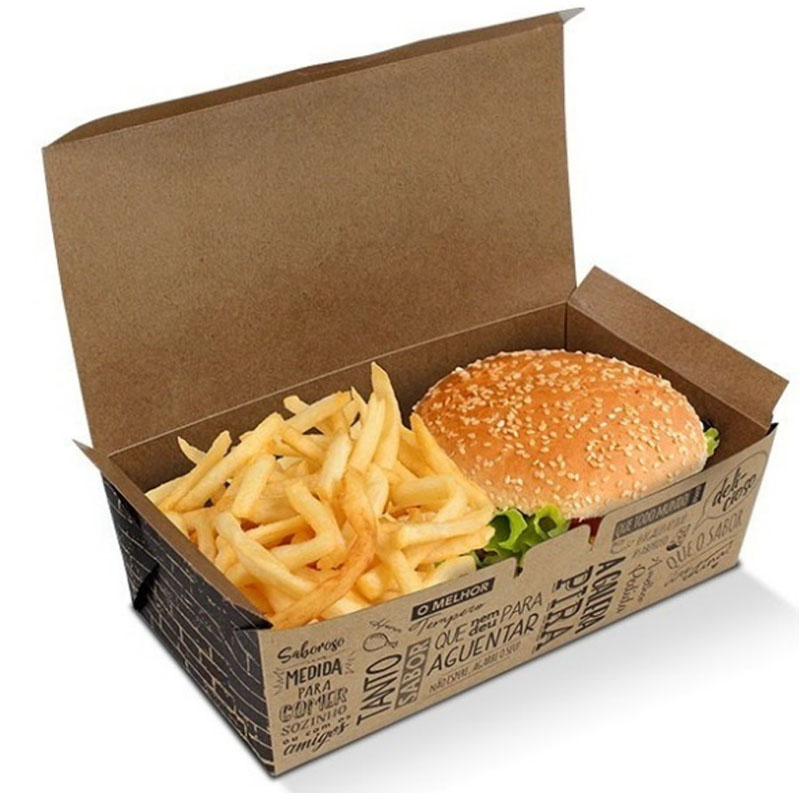
paper food packaging box

paper takeaway box

fast food packaging box
Create Clear and Recognizable Printing
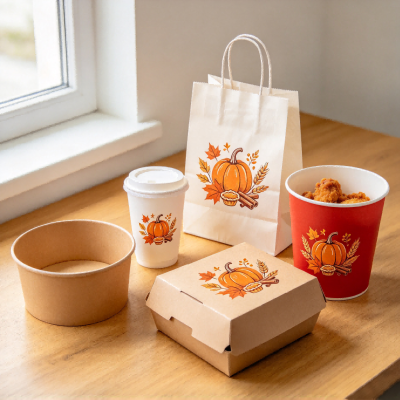
Custom printing turns packaging into a brand communication tool. Place the logo where customers can see it easily, and use readable fonts, consistent colors, and concise messages. Avoid covering every surface with graphics, because crowded layouts can make important information difficult to recognize.
Before printing a fast food packaging box, confirm artwork dimensions, color specifications, folding lines, and the position of text. Request a proof or printed sample to check how the design looks after assembly. Any food-related claims or environmental statements should be accurate and supported by appropriate documentation.
Consider Sustainability and Production Costs
Efficient design can reduce unnecessary material without sacrificing strength. A correctly sized paper fast food box may help limit excess packaging, while recyclable paper components can be useful where local collection systems accept them. Coatings, food residue, and mixed materials may affect recyclability, so disposal claims should be verified.
Compare more than the unit price. A well-designed paper food packaging box can help reduce damaged meals, packing delays, and storage difficulties. Ask suppliers about minimum order quantities, printing options, sample approval, production lead times, and quality checks before confirming an order.
How Can You Check the Final Design?
Test the finished paper takeaway box with actual food. Check whether it closes securely, resists normal handling, stacks reliably, and remains practical after the expected journey. Review both packaging performance and customer convenience before moving to bulk production.
The best custom design is not necessarily the most complicated. By matching dimensions to the menu, selecting suitable materials, planning functional details, and verifying printing and food-contact requirements, businesses can develop a paper fast food box that supports daily operations and presents their brand professionally.
Related News
Read More >-
![How Is the Takeaway Industry Changing Food Packaging?]()
How Is the Takeaway Industry Changing Food Packaging?
The takeaway industry is changing as customers expect faster service, reliable delivery, and packaging that suits modern lifestyles. Restaurants must protect food quality while managing costs, reducing material waste, and meeting customer expectations. These changes are influencing how businesses select a fast food burger box, paper carriers, and other food packaging for everyday orders.
-
![How Is Sustainability Changing Fast Food Packaging?]()
How Is Sustainability Changing Fast Food Packaging?
Sustainability is becoming an important consideration for restaurants, takeaway businesses, and food retailers. Customers increasingly want convenient meals with less unnecessary packaging waste, encouraging businesses to rethink materials, design, and disposal. From a fast food burger box to paper carriers, sustainable packaging choices can help food businesses balance product protection, customer experience, and environmental responsibility.
-
![Can Compostable Utensils Help Reduce Plastic Waste?]()
Can Compostable Utensils Help Reduce Plastic Waste?
Plastic waste remains a major challenge for restaurants, takeaway services, hotels, and food retailers. Disposable forks, spoons, and knives are convenient, but conventional plastic products can remain in the environment for many years when improperly discarded. Compostable disposable utensils offer an alternative that can help businesses reduce their reliance on conventional plastics while meeting changing customer expectations.
-
![How Can Wooden Cutlery Brands Stand Out in 2026?]()
How Can Wooden Cutlery Brands Stand Out in 2026?
In 2026, compostable disposable utensils can compete through more than environmental positioning alone. By offering natural birchwood products, supporting responsible sourcing, providing appropriate compliance evidence, and serving foodservice and retail customers with flexible packaging solutions, brands can create meaningful value in an evolving market.
-
![Salad Paper Bowl Lids: PET, PP and Paper Compared]()
Salad Paper Bowl Lids: PET, PP and Paper Compared
-
![Paper Cup Coatings: EVA, Acrylic, PLA and PE Compared]()
Paper Cup Coatings: EVA, Acrylic, PLA and PE Compared
Paper cup coating decides heat resistance, film cracking, and compost claims. ODPACK compares EVA, acrylic, PLA, and PE systems, including the production behaviour behind each film.
-
![Bagasse vs Kraft vs PP: A Material Selection Matrix]()
Bagasse vs Kraft vs PP: A Material Selection Matrix
Menu temperature, oil load, and end-of-life rules decide whether bagasse food packaging, kraft food containers, or plastic food containers fit. ODPACK builds a selection matrix by menu type.
-
![Thanksgiving Catering Packaging: A 2026 Order Timeline]()
Thanksgiving Catering Packaging: A 2026 Order Timeline
Catering teams finalize Thanksgiving menus through October, and packaging must clear production before the Q4 freight crunch. ODPACK maps a six-week order timeline with volume math.