

How Is The Moisture Resistance Of Corrugated Paper Cups Achieved?
2025-12-22 13:00
In today's fast-paced world, disposable paper cups have become a staple for serving hot and cold beverages on the go. Among these, paper coffee cups—especially those designed as disposable coffee cups with lids—are widely used in cafes, offices, and events. A critical feature that ensures their functionality and durability is moisture resistance. Without it, coffee cups with lids would quickly become soggy, leak, or even collapse, compromising both user experience and product integrity. This article explores how moisture resistance is achieved in corrugated paper coffee cups with lids and what makes disposable coffee cups reliable for everyday use.
The moisture resistance of disposable coffee cups primarily depends on the materials and coatings applied during manufacturing. Most paper coffee cups are made from paperboard, which is naturally porous and absorbent. To prevent liquid from seeping through, the inner surface of the cup is coated with a thin layer of waterproof material. Traditionally, this has been polyethylene (PE) plastic, which forms an effective barrier against moisture while remaining safe for food contact. In recent years, more eco-friendly alternatives, such as plant-based PLA (polylactic acid) coatings, have gained popularity, especially for disposable coffee cups with lids marketed as compostable or biodegradable.
In the case of corrugated paper coffee cups with lids, the structure itself adds an extra layer of protection. Corrugated paper consists of a fluted inner layer sandwiched between two smooth outer layers. This design not only enhances insulation—keeping drinks hot or cold longer—but also improves resistance to condensation and external moisture. When combined with an inner coating, corrugated paper coffee cups become highly effective at preventing leaks and maintaining structural integrity, even when used for extended periods.
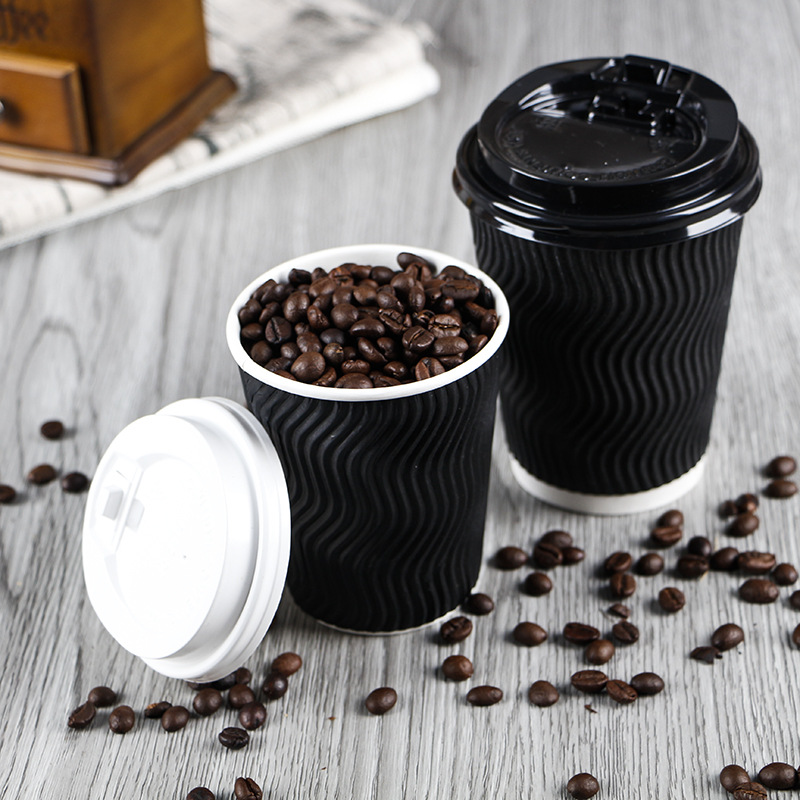
paper coffee cups with lids
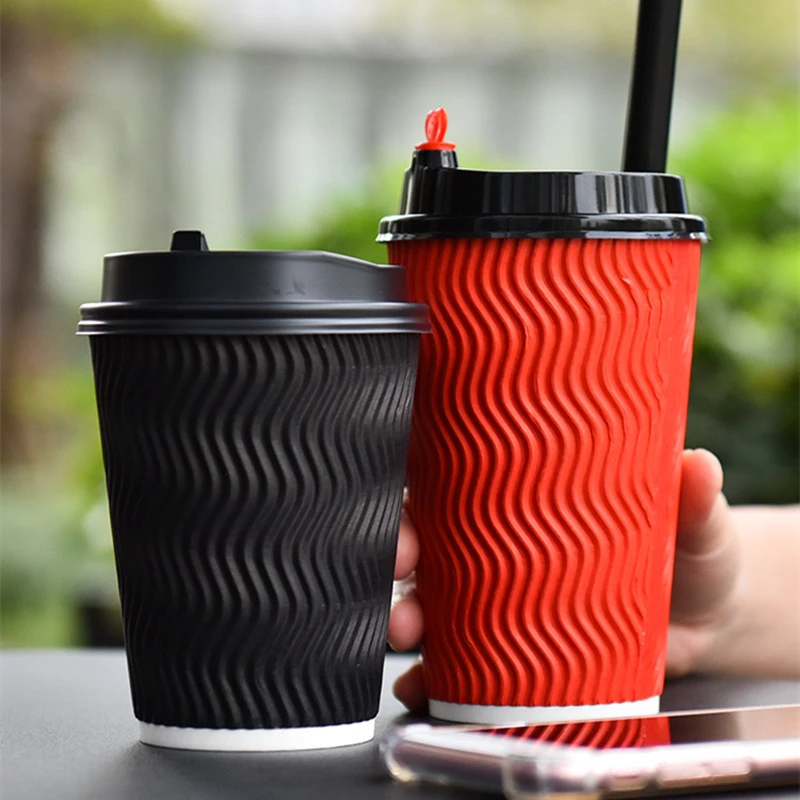
disposable coffee cups
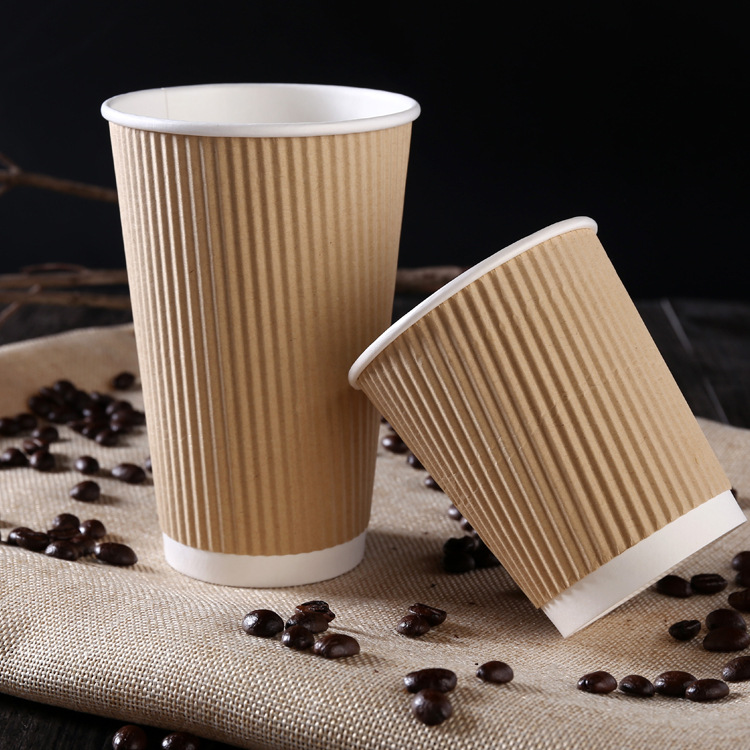
paper coffee cups
Another key factor is the lid design. Coffee cups with lids often feature tightly sealed edges and specially engineered sip openings or slide closures. These lids are usually made from plastic or coated paper materials that repel moisture and prevent spills. For disposable coffee cups with lids, the lid acts as a secondary barrier, reducing exposure to external humidity and minimizing the risk of the cup weakening from the top down. This is especially important for paper coffee cups with lids used for iced beverages, where condensation can quickly compromise the cup’s exterior.
Manufacturing processes also play a vital role. During production, the paperboard is precisely cut, shaped, and sealed using heat or adhesives that are themselves water-resistant. The seams of disposable coffee cups are often reinforced to prevent leakage at the joints. Quality control measures ensure that every paper coffee cups with lids meets industry standards for moisture resistance, such as those set by the FDA or other regulatory bodies. This attention to detail ensures that coffee cups with lids perform reliably under typical usage conditions.
The moisture resistance of corrugated paper coffee cups are achieved through a combination of material coatings, structural design, lid engineering, and careful manufacturing. These elements work together to create disposable coffee cups that are durable, leak-resistant, and fit for purpose. Whether you’re enjoying a hot latte or a cold brew, understanding how these cups are made highlights the innovation behind everyday convenience and helps consumers make informed choices about the products they use.
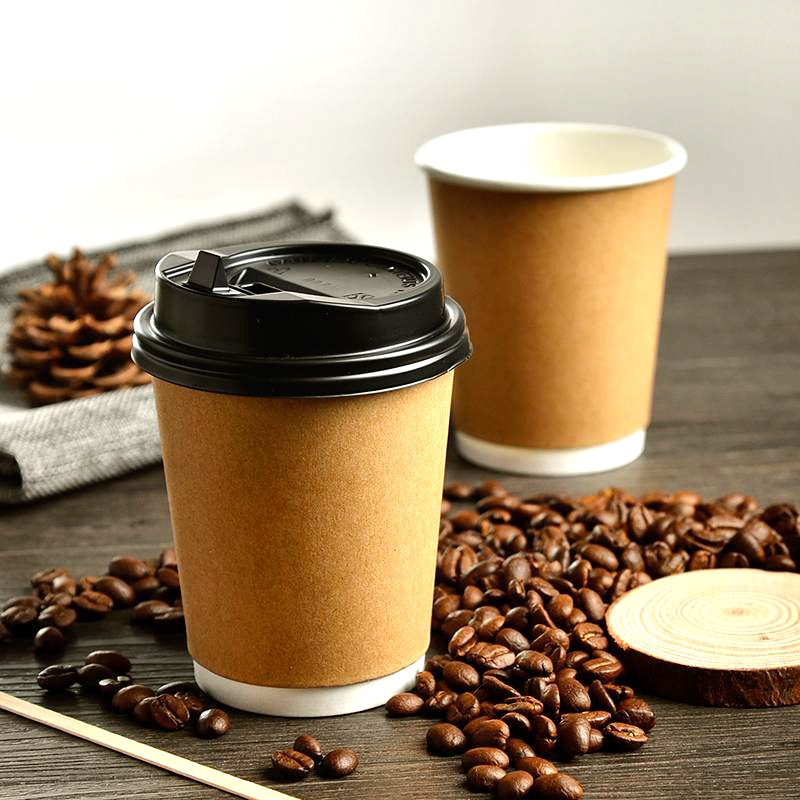
disposable coffee cups with lids
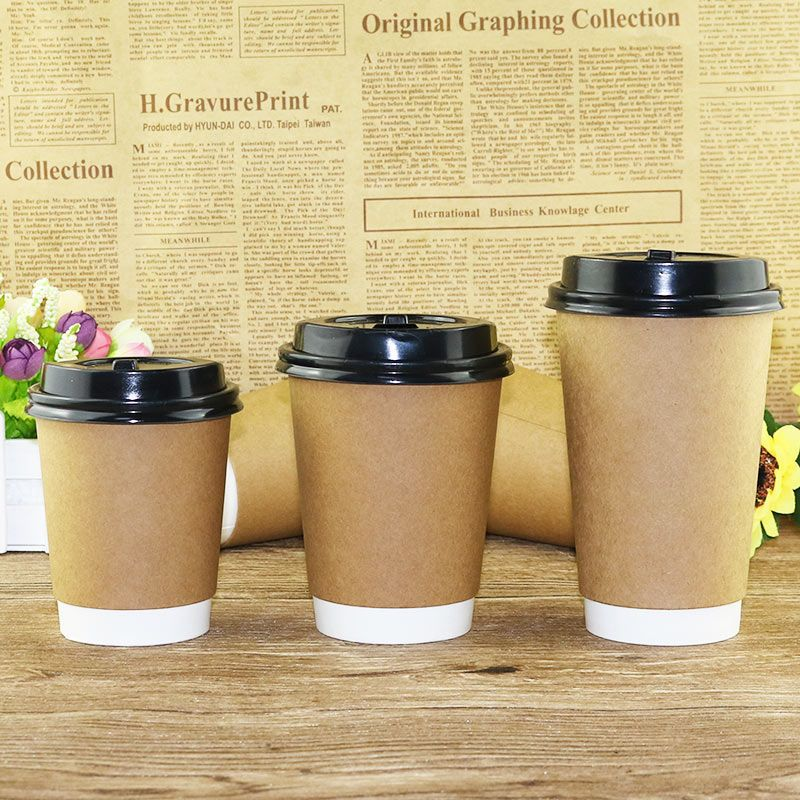
coffee cups with lids
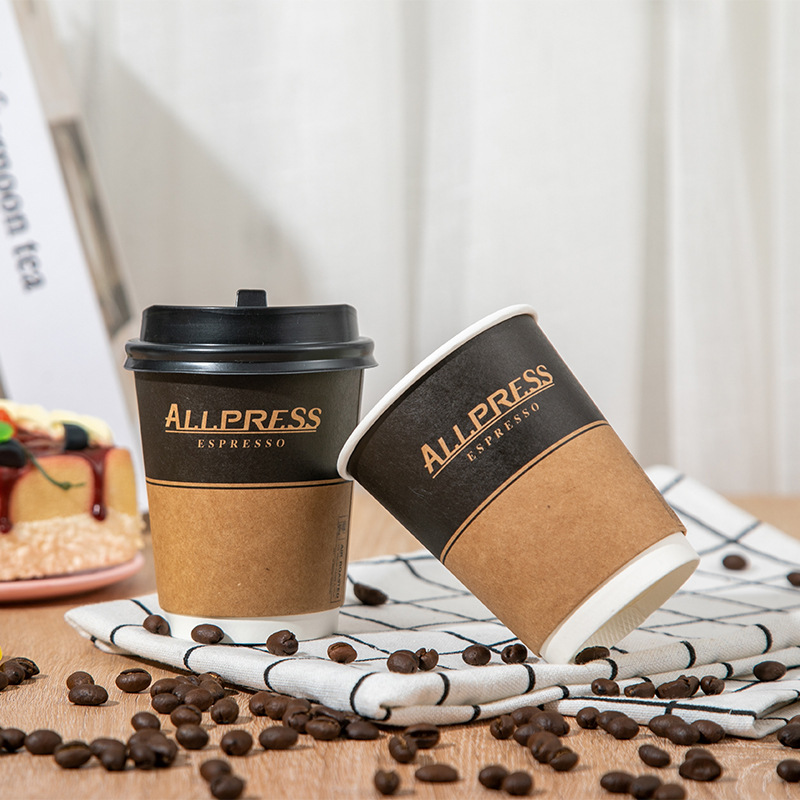
disposable coffee cups
Related News
Read More >-
![How Does Sushi Push Up Tube Packaging Improve Freshness?]()
How Does Sushi Push Up Tube Packaging Improve Freshness?
Freshness is one of the most important qualities consumers expect from prepared sushi. After sushi is assembled, exposure to moisture, grease, handling, and the surrounding environment can affect its appearance and eating experience. A thoughtfully designed sushi push up tube provides a controlled packaging environment that helps protect the product during storage, transportation, and consumption.
-
![Why Choose Wholesale Sushi Push Up Tube Packaging?]()
Why Choose Wholesale Sushi Push Up Tube Packaging?
As takeaway sushi and ready-to-eat food continue to develop, packaging needs to do more than simply hold a product. Restaurants, retailers, caterers, and food distributors are looking for packaging that combines food protection, convenience, presentation, and efficient purchasing. For these businesses, wholesale sushi push up tube packaging offers a practical format designed around the real needs of modern foodservice.
-
![How Does Sushi Paper Tube Packaging Support Food Safety?]()
How Does Sushi Paper Tube Packaging Support Food Safety?
For takeaway and retail applications, the combination of a suitable sushi paper tube, food-contact-appropriate materials, effective handling procedures, and practical design can create a more reliable packaging solution. As consumers continue to value both convenience and hygiene, well-engineered paper sushi container formats such as the sushi roll tube and sushi push pop can provide useful support for modern sushi businesses.
-
![Food Packaging Certifications: FDA, FSC, CE, BRCGS]()
Food Packaging Certifications: FDA, FSC, CE, BRCGS
FDA, FSC, CE, and BRCGS — four certifications every food packaging buyer asks about. ODPACK decodes what each certificate proves, which markets require it, and how to verify supplier documents before placing wholesale food packaging orders.
-
![Compostable vs Recyclable: Choose Right for Foodservice]()
Compostable vs Recyclable: Choose Right for Foodservice
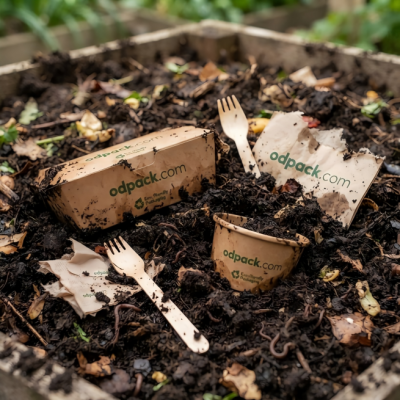
Compostable and recyclable packaging both claim sustainability, but each works only in specific foodservice conditions. ODPACK compares cost, durability, waste infrastructure, and end-of-life outcomes to help buyers choose the right food containers for every application.
-
![EU PPWR Effective Aug 12: What Importers Must Do Now]()
EU PPWR Effective Aug 12: What Importers Must Do Now
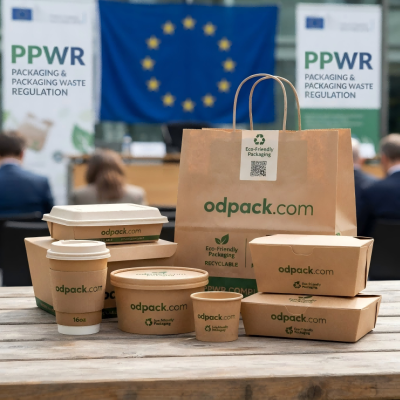
The EU Packaging and Packaging Waste Regulation takes full effect August 12, 2026, with new PFAS limits on food packaging. ODPACK explains what Asian suppliers and importers must verify, document, and change before shipping into European markets.
-
![MOQ Negotiation: 5 Tactics That Work for Chain Buyers]()
MOQ Negotiation: 5 Tactics That Work for Chain Buyers
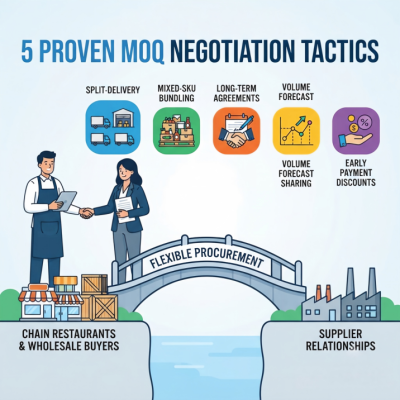
Minimum order quantity constraints block procurement flexibility for chain restaurants and wholesale buyers. ODPACK presents five proven MOQ negotiation tactics — from split-delivery structures to mixed-SKU bundling — that reduce per-unit risk without harming supplier relationships.
-
![Plastic Packaging Regulations: A 2025-2027 Compliance Timeline]()
Plastic Packaging Regulations: A 2025-2027 Compliance Timeline
From the EU to California to Canada, single-use plastic packaging regulations are accelerating. ODPACK maps every major compliance deadline between 2025 and 2027, showing which food containers, bowls, and packaging categories face mandatory material changes and when.